
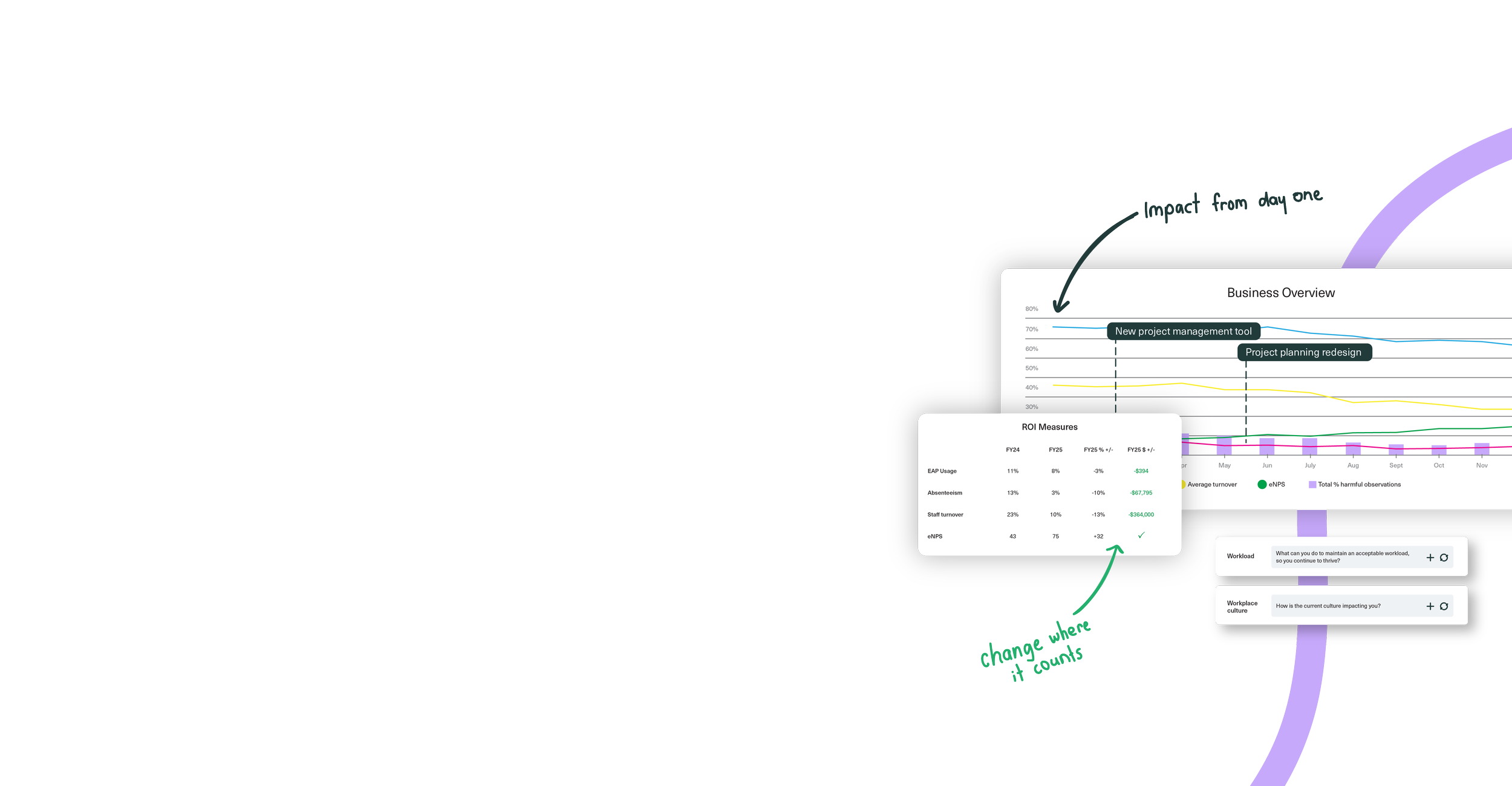
Every 1:1 is a chance to catch what’s really going on
HeyPenny turns check-in conversations into real oversight, safer data, and stronger retention. Built for leaders managing distributed, shift-based, and high-pressure teams.
Organisations that trust us
















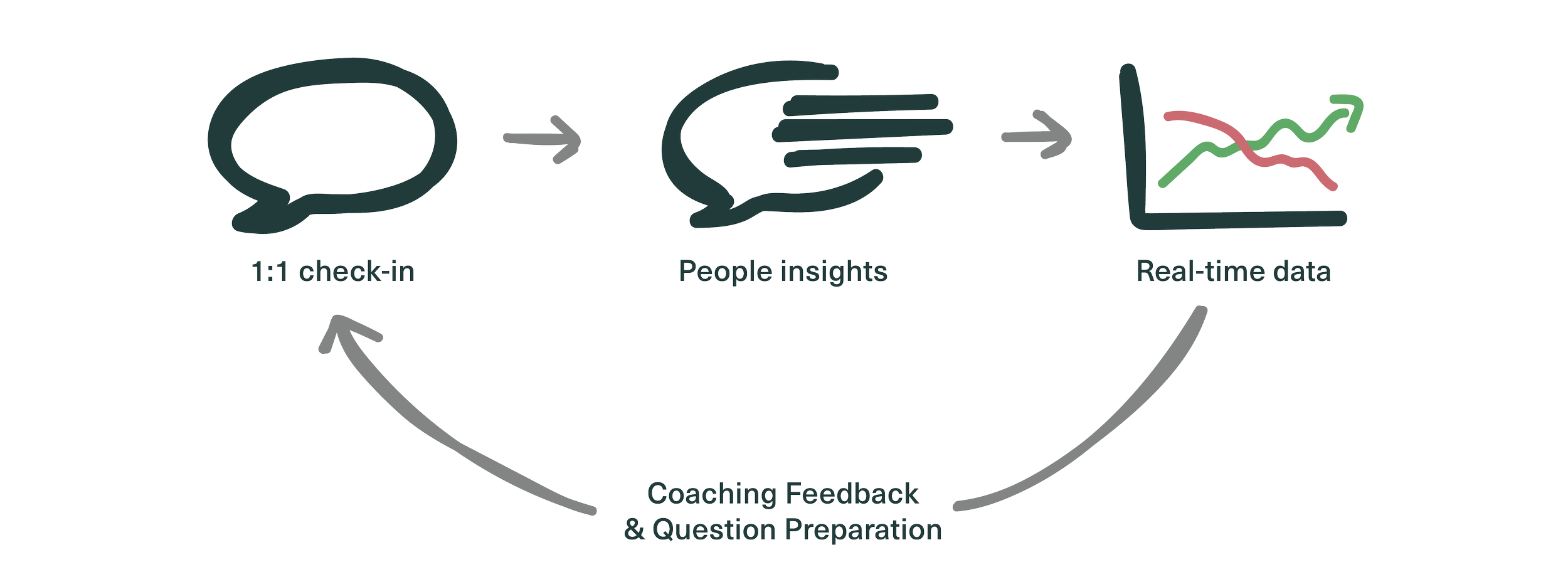
How it works

Designed for you.
Built for real workplaces.

Scalable, real-time leadership coaching
Most leaders are promoted for doing the job well. HeyPenny helps them build the people skills that come next.
See every team, without being in every room
Each 1:1 recorded in the HeyPenny platform unearths employee insights, giving you a live view across every ward, department and site.
Build the relationships that keep your people
The relationship someone has with their leader decides whether they stay or go. HeyPenny helps leaders build trusting relationships through 1:1 conversations.
Insights kept. Transcripts deleted.
Scribe the conversation, confirm the insights, delete the transcript. Nothing left over for someone to misuse or paste into ChatGPT later.
Don’t take our word for it
-
![Sally Rosenberg from Community Living profile picture]()
"HeyPenny's coaching feedback is a great reminder to ask more open-ended questions with my team. It's a small prompt that keeps even an experienced leader on top of good practice."
Sally Rosenberg, Community Living, GM Property & Projects
-
![Woman with long brown hair smiling and wearing a dark green top against a gray background.]()
“Using HeyPenny has enabled me to have genuine conversations with my team. I feel more confident as a manager, knowing that I am taking care of my team members."
Bronwyn Presland, HASANZ GM
-
![A woman with shoulder-length brown hair, wearing glasses on her head, a black blazer, and a pearl necklace with a pink heart-shaped pendant, smiling in front of a wall with framed pictures.]()
“HeyPenny's AI Agent adds another pair of digital eyes, ears and neurons that ensure nothing is missed. Noticing things in real-time could be the most powerful piece of information leaders need to support their people”
Alsu Sworder, Litmaps
-
![Woman with long blonde hair laughing, wearing a black leather jacket and layered necklaces, against a dark background.]()
“HeyPenny changes the game on performance and productivity, empowering leaders to have great conversations that drive business forward.”
Amy Johnston, Head of People & Capability
-
![A woman with red hair tied in a bun, wearing glasses, a white shirt with orange polka dots, and smiling.]()
“HeyPenny gave us the tools to truly understand what's happening with our people, and the confidence to act on those insights with an action plan that was tailored to our organisation and people needs."
Bex Grace, CreativeHQ
-
![HillaryBennettHP]()
"HeyPenny will support wellbeing manager-led conversations that are structured around factors that have the potential to harm mental wellbeing as well as those that can protect their wellbeing."
Hillary Bennett, Leading Safety
-
![A young man with short brown hair and a friendly smile, outdoors with greenery in the background, wearing a navy blue hoodie.]()
“As an HR lecturer I’ve seen how HeyPenny uniquely equips SME leaders with a low-friction conversation-led platform to gather real-time insights into employee sentiment. It turns everyday check-ins into meaningful data that SMEs can act on to boost engagement, wellbeing and performance”
Dan Langerud, Victoria University







Backed by a longitudinal research study that's already under way
Victoria University of Wellington, in partnership with HeyPenny, is running a national longitudinal study to confirm what we already see in the data and hear from customers: that 1:1 check-ins can predict and improve wellbeing, engagement, and performance. Preliminary results are expected October/November 2026, with final results due out early 2027.

Case Study:
Capital & Coast
Department of
Anaesthesia
12 Executive Leaders | 5-month pilot | 3× 1:1 check-ins
Twelve executive leaders went in sceptical that conversations alone could make a difference. Five months later, scheduling had gotten easier, conversations had gotten deeper, and department leads had a level of visibility into their senior team they'd never had before.
“The pre-emptive nature is great. Fence at the top rather than ambulance at the bottom”